Nunavik by Chow Mwng
The history of North European singing has traditionally centred on folk music in the form of working songs, storytelling and dance music, or it has been part of the choral tradition of church music and worship. The use of the voice in modern music is generally metered and structured and in the case of much unaccompanied singing is built around the use of harmonies. In this sense it has lost a lot of its ancient tribal, ritualist oral tradition.
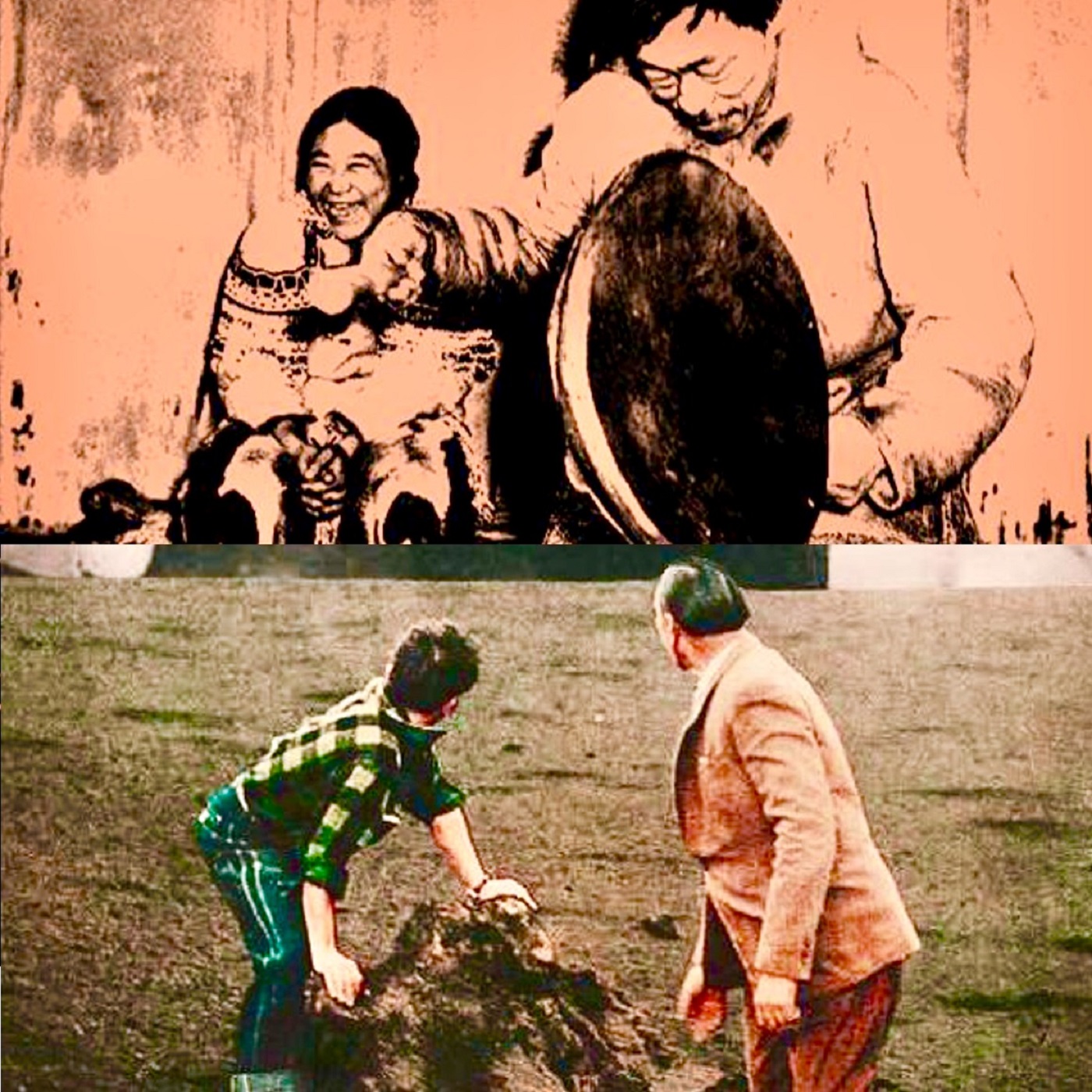
In contrast, the vocal music of the North Canadian Inuit people is a musical form deeply rooted in Inuit culture that has been carried forward orally from one generation to another and explores non-musical values though the use of unusual textures/timbres and the resonance of the throat. It is a more primitive musical form where songs are created to mimic the sounds of daily life or surrounding natural elements and wildlife.
Inuit throat music is traditionally performed between two women. The songs are sung as a friendly competition; played as a game. One person sets the rhythm, the pace the sound and the other follows. The first person to outlast or not laugh is the winner
I decided that I wanted to explore this style of vocal expression in a set of recordings as a way to try and deconstruct my own notion of how a voice should be used in music. I also wanted to combine the results of these experiments with my own interests in sound art, audio collage and pop culture