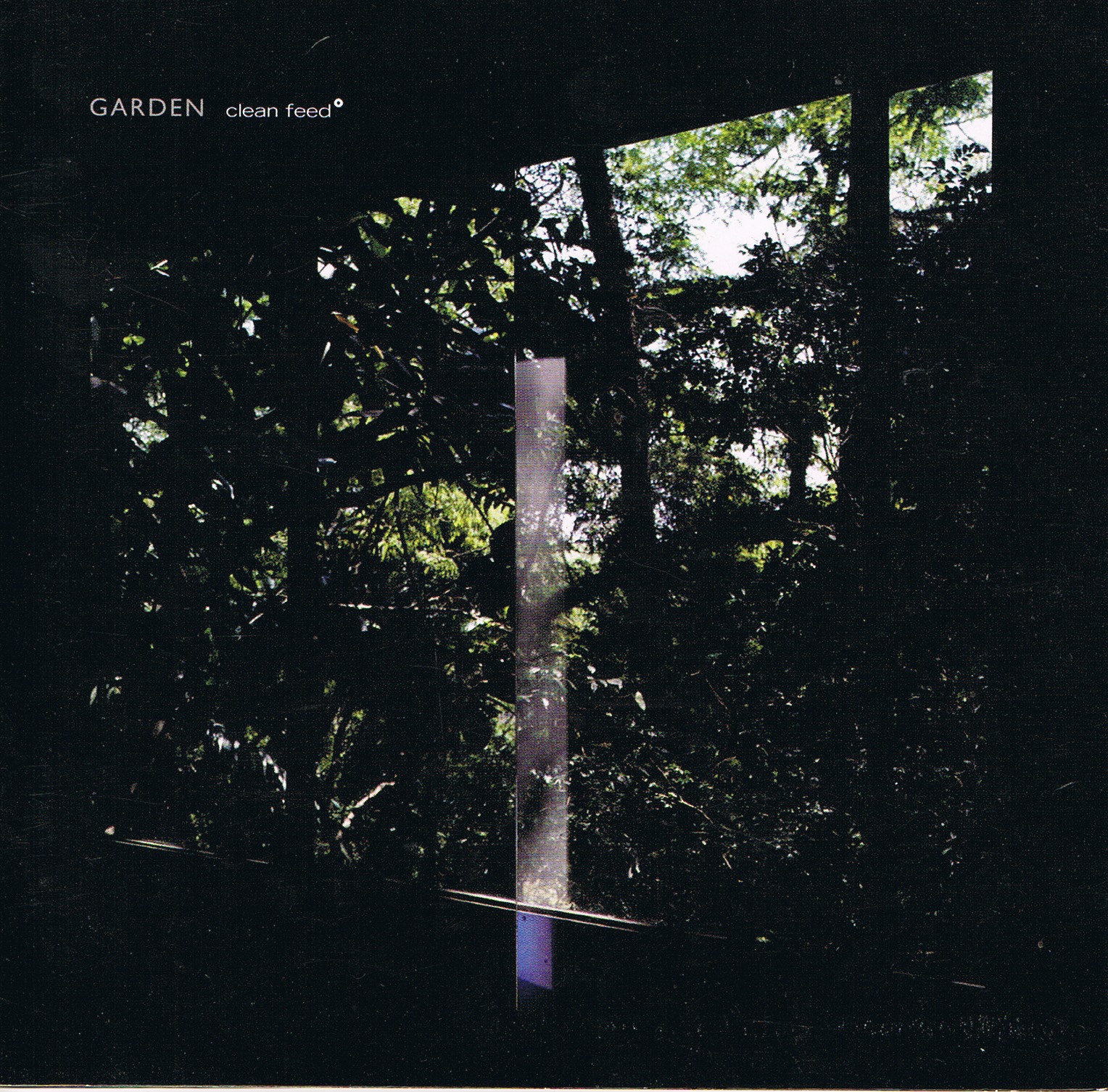
GARDEN by José Bruno Parrinha, Luís Lopes, Ricardo Jacinto
Tracks 2,3 and 6 recorded on February 20th 2015 by John Klima at Scratch Built Studio, Lisbon.
Traks 1,4,5 and 7recorded on February 22nd by Joaquim Monte at Namouche Studio, Lisbon.
Mixed and mastered by Joaquim Monte at Namouche Studio.
Produced by Parrinha, Lopes and Jacinto.
Executive production by Trem Azul.
Cover photo by André Cepeda.
Graphic design by Travassos.
REVIEWS
Garden is an adventurous collective trio recording featuring Bruno Parrinha on alto and soprano saxophones as well as clarinet, Luis Lopes on electric guitar and Ricardo Jacinto on cello and electronics. The music is skillful, often subdued improvisation, of a very restrained order, and yet seeming loose, despite the control. “1351” has very light peals of breathy saxophone with the barest scrapes of cello and guitar as deep cover accompaniment. The music is spare and abstract, never rushing for a conclusion or resolution. There is a quiet air of ominousness at times, as if all is not as it seems. There are long drones of pure sound juxtaposed against scrapes and clangs, as the electronics frames and challenges the music. Smears of electric and acoustic instruments create a unique sound field. Slabs of sound weave in and out on “1402,” like transmissions from a lost spacecraft. The musical terrain is ever changing with its raw nature continuing to challenge as sparks of guitar and cello arc across the music. “555” offers gentle guitar sounds with quiet sighs of saxophone and clarinet while plucked cello adds a bass like momentum. There is exciting raw free saxophone on “516” with cycling electronics becoming more prominent. The music is unfettered and powerful, the squeaks and pops of the electronics and strings engage with the raw and powerful reed playing played in a skillful manner. The music becomes enchanting and hypnotic with a wide mix of sounds coming to the listener. “1030” has burbles of clarinet and sparks of electricity and the musicians show how deeply attuned their listening skills are, playing at a very high level and allowing the trio to improvise collectively creating a haunting landscape around them. Things are getting a little wilder on “744,” with sawed cello and snarling guitar creating a release for all of the tension that has been building in the previous selections. The long dawn out enthralling sounds on this track are emblematic of the album as a whole, a fascinating endeavor.
Tim Niland
http://jazzandblues.blogspot.pt/
Guitarist Luís Lopes is a distinguished figure in the vigorous Lisbon free jazz/improvised music scene. His work covers a broad spectrum that begins with his Humanization 4tet... (...) ...and on the literally titled Noise Solo LP. Other dimensions of Lopes’ expansive vision appear in the recent CD by the trio Parrinha/Lopes/Jacinto and the solo LP Love Song.
Lopes plays his customary electric guitar as a prepared lap instrument in the collective trio with José Bruno Parrinha on clarinet and alto and soprano saxophones and Ricardo Jacinto on cello and electronics, and it’s a key to a certain abstraction the trio practices, a shift from the sheer physicality of much of Lopes’ music. The seven tracks are simply numbered: the sole verbal content the trio affixes to its music is that name Garden, but it may say everything. It’s largely textured or timbral music, each episode a series of evolving layers that at times seem linked principally by their simultaneity, even while identity is sublimated in the music; at other times, the levels of intensity and responsive detail are startling. While the focus is sonic, the music is often constructed on scraps of minimal melody, an elemental phrase, a kind of emblem, that’s repeated. ln “1,” a piece of sustained beauty that insists on the garden metaphor (a range of vision over shifting textures and ground and changing patterns of light and shade), melodic repetition and drone fuse to create a kind of raga. While “5” is a sustained episode of electronic grit, “4” stands out for Parrinha’s expressionist alto explosion. That diversion is ultimately drawn into the larger theme when the saxophone line is echoed by the others, as if a bramble has suddenly caught sunlight and cast its shadow on another species. Gradual shifts are a characteristic here, especially on the extended pieces, whether it’s a line from reflection to dense turbulence (“1”) or the opposite (“2”). “6” moves from a certain tense randomness to unison, while “7” is pointillist scattershot. Whatever the details of a piece, there’s a strong sense of attention that links these pieces, a continuing involvement that encourages close listening.
Stuart Broomer
http://www.pointofdeparture.org/
Garden (Clean Feed 369) pits three uncompromising yet most accomplished artists in the new improv from Europe into a three-way series of seven collective endeavors. The sensitive interplay between the sound-and-tone spectrums of Bruno Parrinha (alto, soprano, clarinet), Luis Lopes (electric guitar) and Ricardo Jacinto (cello and electronics) is paramount and acerbically poetic.
The creative choices in tone combinations and textural contrasts make this a trio soundscape of striking avant beauty. Close listening reveals this over time. The first hearing may not be entirely comprehensible. It is not easy-going music for all that, but rather music of courageous conviction if you will. The beauty is there but it is up to the listener to find it after first willing the ears to adjust to the broad spectrum of timbral possibilities that the group realizes.
There are magical moments where you forget which instruments are involved and revel in the sometimes thick but ever evolving layers of sound color.
Perhaps we have come such a distance in new music improvisation on the continent in recent decades that some important examples of the avant scene there cannot as easily be directly referenced back to the improv of US generated free jazz as perhaps much of it has in the past. Now that does not mean that one thing is better than another, or that one is more legitimate! It is all a part of what is going on now and deserves our attention and respect.
If I imply that this trio disk is a seminal example of Euro-avant improv as it has evolved, I do that intentionally, for it is.
We who have grown up in the consumer-oriented, everything-must-be-rapidly-replaced-by-something-better world sometimes let that mentality carry over into artistic spheres. We should not. This does not replace or supplant other forms of the avant garde. It exists and flourishes parallel to the other possibilities. For this we should be happy. For sure, Garden is a most happy result of three musician-creators hitting their collective stride.
And for that you owe it to yourself to hear this. I mean that.
Grego Applegate Edwards
http://gapplegatemusicreview.blogspot.pt/
Credits
José Bruno Parrinha - Alto and soprano saxophones, clarinet
Luís Lopes - Electric guitar
Ricardo Jacinto - Cello and electronics
License
All rights reserved.





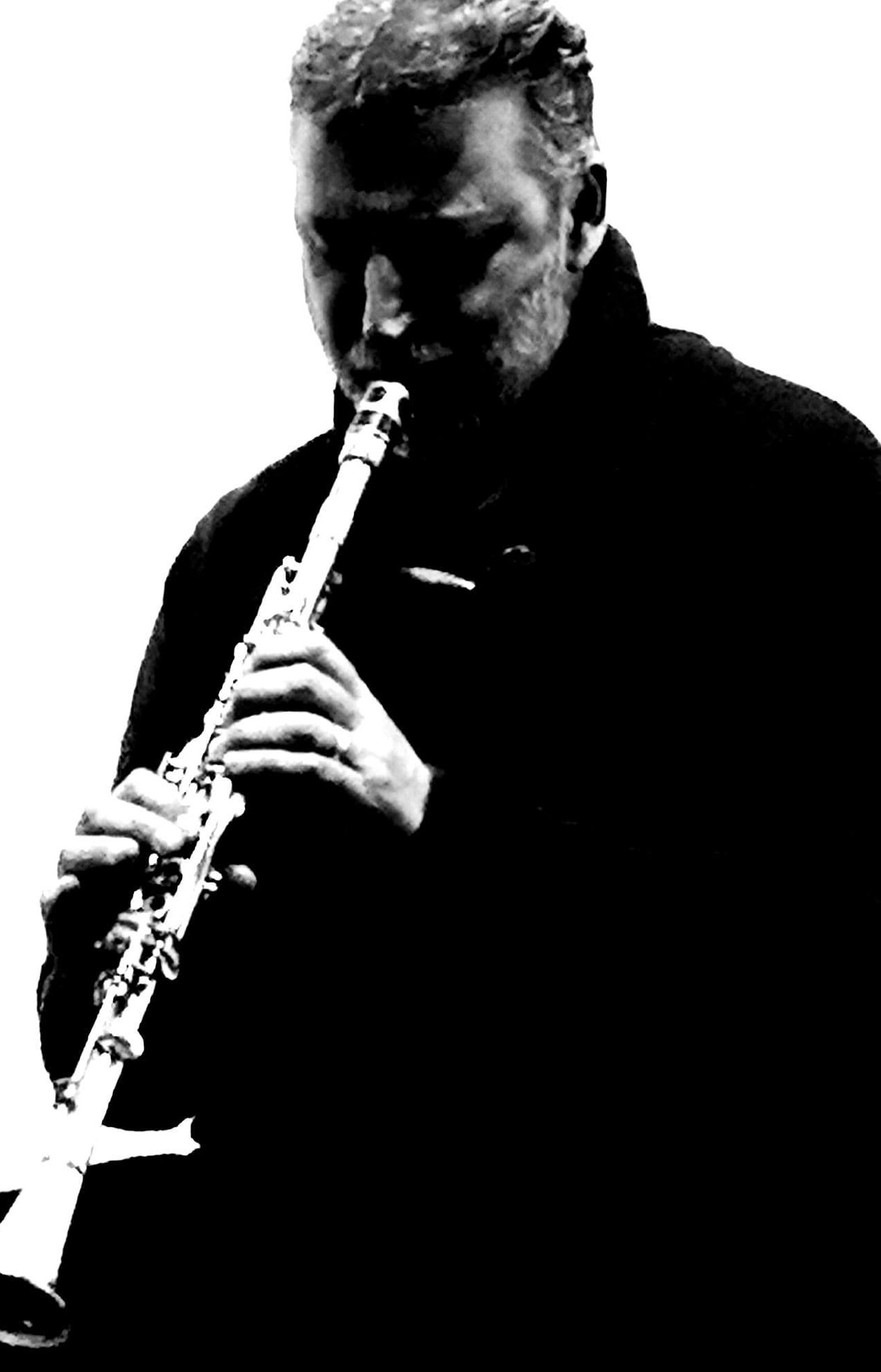
Saxophonist and clarinetist. He studied solfeggio at the Academia de Amadores de Música. In 1988 he recorded "Songs against love and terrorism" with Sei Miguel. Since then he has dedicated himself to free improvisation participating in numerous formations and concerts with distinguished musicians such as Ernesto Rodrigues, Rodrigo Amado, Luis Lopes, Paulo Curado, Carlos Zíngaro among many others.